
Understanding Indian Lease Land vs Fee Simple Land
What is Lease Land?
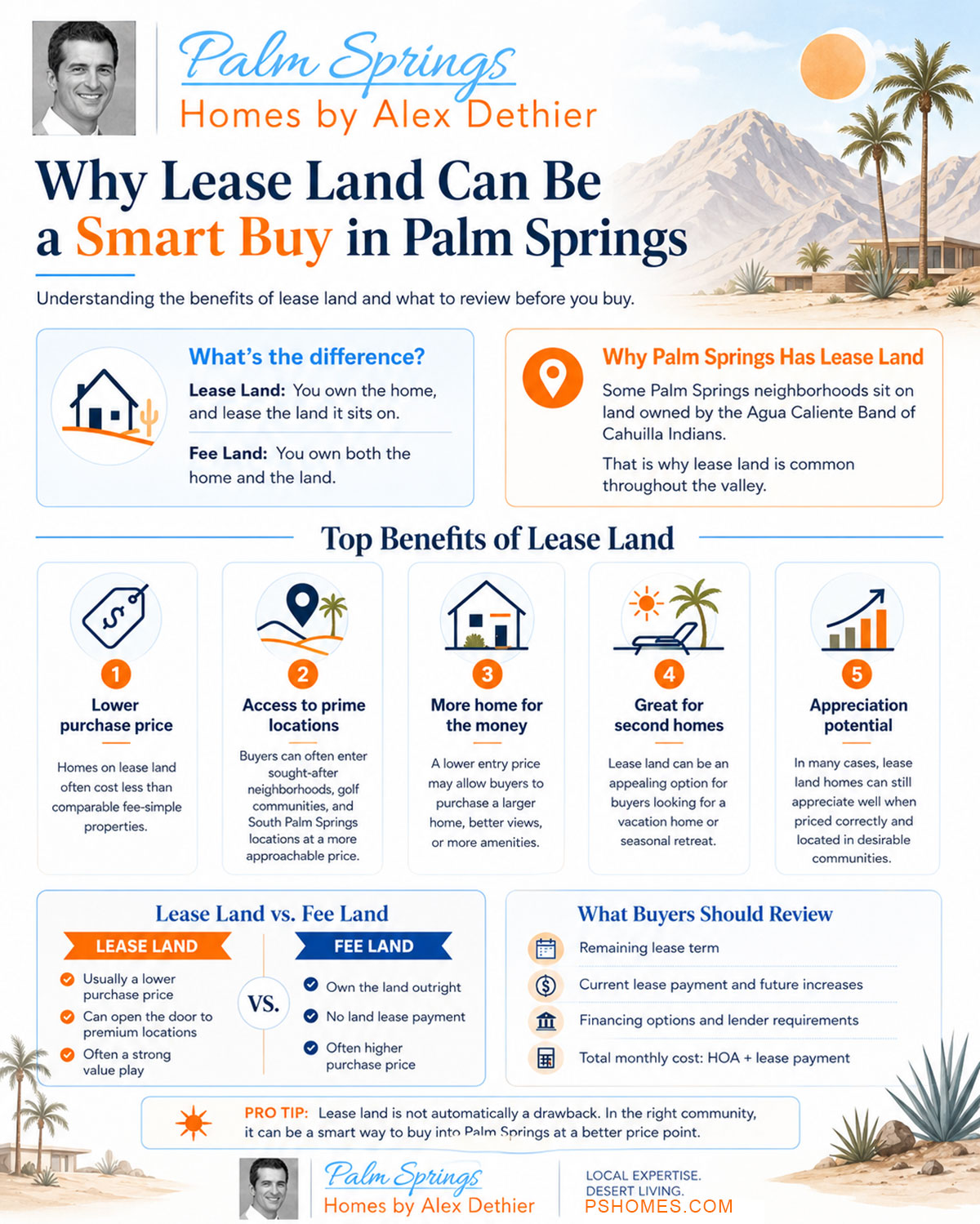
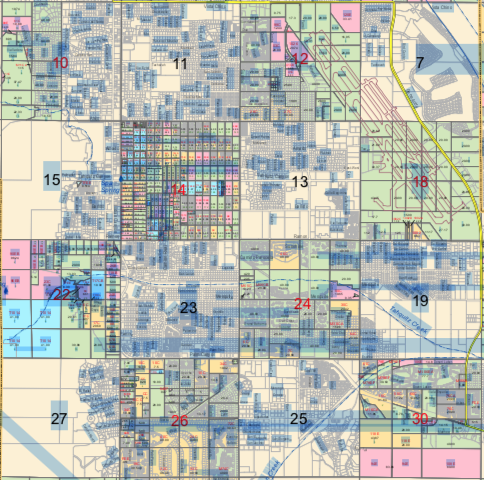
Palm Springs has an unusual checkerboard pattern of fee-simple and lease-land properties. With fee-simple ownership, you generally own both the residence and the land beneath it. When purchasing a home on leased land, you acquire an ownership interest in the residence and the right to use the land according to the terms of a long-term ground lease.
Many Palm Springs homes and condominium communities are located on land associated with the Agua Caliente Indian Reservation. Lease-land properties can offer attractive locations, architecture and purchase prices, but every lease is different. Buyers should review the remaining lease term, current land rent, scheduled increases, transfer provisions and lender requirements before purchasing.
🔎 Download the information graphic here>>
ℹ️ Direct information from the Bureau of Indian Affairs is available here 🔗.
Lease Land vs. Fee Land in Palm Springs
| Consideration | Lease Land | Fee Land |
|---|---|---|
| Land ownership | The buyer owns the residence and holds leasehold rights to use the land. | The buyer generally owns both the residence and the land. |
| Land payment | Ground rent is paid according to the lease terms. | No ground rent is ordinarily required. |
| Purchase price | May be lower than a comparable fee-land property, but the difference varies. | Typically reflects the value of both the residence and underlying land. |
| Financing | Available, subject to the lease, remaining term, property and lender requirements. | Generally available through conventional mortgage programs, subject to qualification. |
| Ongoing costs | May include land rent, HOA dues, taxes, insurance and assessments. | May include HOA dues, taxes, insurance and assessments. |
| Resale | Can be affected by the remaining lease term, financing availability and land-rent adjustments. | Not subject to a ground-lease expiration date. |
| Buyer review | Includes the ground lease and amendments in addition to normal property documents. | Includes title, disclosures, HOA documents when applicable and normal property records. |
Does Indian Lease Land Impact Property Value?
Typically, Indian lease land properties have increased/decreased in value at the same rate as fee simple land properties. Below is a brief history of how it came to be and what it means to contemporary homeowners and buyers.
Coachella Valley Indian Lease Land History
In 1876, when the Pacific Railroad began laying tracks between Los Angeles, CA and Yuma, AZ, the U.S. government took possession of all the land and gave the Pacific Railroad title to “checkerboard parcels” of every other square mile of land (running east/west) for 10 miles (running north/south) on either side of the railroad right-of-way. The government then deeded ownership of the non-Railroad land to the Agua Caliente Band of Indians, which limited their ownership rights to 52,000 acres of the Coachella Valley, 6,700 acres of which are in Palm Springs. Use these links to learn more about the history of Indian lease land, and to see a map of Palm Springs Indian lease land
Today’s Lease Land Landscape
Some of the best neighborhoods in Palm Springs are on Agua Caliente land. Over 23,000 residential properties in the Coachella Valley are on Indian lease land, which gives the homeowner rights to the land for the duration of the lease. Some leases have been extended or renegotiated, but buyers should never assume a future extension. Because each lease is unique (incl start date), each must be reviewed for the specific terms affecting a particular property. The most important factors to consider with a lease land transaction are the lease owner and administrator, lease status and remaining time on the lease.
The vast majority of Indian land leases are administered by the Bureau of Indian Affairs or an appointed property management company. This means that, with a few exceptions, homeowners and buyers do not deal directly with the Indian owners. The land administrator bills and collects the land rent on an annual or monthly basis, according to the terms of the lease.
To learn more about Indian lease land, please contact the Bureau of Indian Affairs, Palm Springs Branch on 760.416.3289, or at their website: BIA Palm Springs.
Why buy Lease Land vs Fee Simple Land?
- Potential Benefits of Buying on Lease Land A lease-land property may be priced lower than a comparable fee-simple property because the buyer is not purchasing the underlying land. This can give buyers access to a preferred neighborhood, larger home or architecturally significant property at a lower initial purchase price. The actual price difference varies by property, location, lease terms and market conditions.
Buyers should compare the entire cost of ownership—not simply the purchase price. That calculation may include the mortgage payment, land rent, HOA dues, property taxes, insurance and any scheduled rent adjustments. - Taxation The secondary advantage is at the taxation level: homeowners are typically only taxed on the market value of the structure, not the underlying land. Contact Riverside County tax assessor for tax information on a specific property.
- Appreciation and Resale Value Appreciation varies by property, location, market conditions and lease terms. The data shows that other factors, including the condition of the property, have far more influence on a property’s appreciation and resale value than the type of land ownership.
- Transferability Leasehold interests can generally be sold or transferred, subject to the lease and applicable approval requirements.
Mortgages on Lease Land
Lease-land properties can be financed, but the property and ground lease must satisfy the lender’s requirements. Approval can be affected by the remaining lease term, lease language, land-rent obligations, property type and loan program. A condominium must also satisfy the lender’s project-eligibility requirements.
Interest rates and down-payment requirements are not guaranteed to be identical to those for fee-simple properties. Buyers should consult a lender experienced with Palm Springs lease-land transactions before making an offer. An experienced local lender can review the lease structure, determine which loan programs may be available and identify potential issues early.
Contact Alex Dethier/Paul Kaplan Group for more information on lenders that process lease loan applications.
Selling a Palm Springs Home on Lease Land
A successful lease-land sale starts with making the lease information easy for buyers and lenders to understand. Sellers should consider gathering the current land-rent statement, lease expiration date, lease amendments, administrator contact information and any available extension documents before listing.
Marketing should clearly explain both the property’s advantages and its lease obligations. Pricing should be based primarily on recent comparable lease-land sales with similar lease terms, rather than relying only on nearby fee-simple properties. Early coordination with the HOA, lease administrator, title company and a knowledgeable lender can also reduce delays after an offer is accepted.
Palm Springs Lease Land FAQs
What does lease land mean in Palm Springs?
Lease land means the buyer owns the residence or another leasehold interest in the property but does not own the underlying land. Instead, the homeowner has the right to use the land according to a long-term ground lease and pays land rent as required by that agreement. Many Palm Springs lease-land properties are located on individually owned or tribal trust land associated with the Agua Caliente Indian Reservation.
What is the difference between lease land and fee land?
With fee-simple ownership, the homeowner generally owns both the residence and the land beneath it. With lease-land ownership, the homeowner owns the residence or leasehold interest while leasing the underlying land. Lease-land properties therefore have ground rent, an expiration date and other lease provisions that buyers must review.
Do I own the home when it is on leased land?
Generally, buyers own the residence or a leasehold interest in the property while leasing the land beneath it. However, the ground lease determines the parties’ rights and what happens to improvements when the lease ends. Buyers should confirm the exact ownership structure through the lease, title report and other transaction documents.
How much is the land rent?
Land rent varies considerably by property and lease. It may be billed monthly, quarterly or annually and may be separate from HOA dues. Buyers should verify the current rent, payment schedule, administrative charges and future adjustments for the specific property rather than relying solely on an online listing.
How long are Palm Springs land leases?
There is no single lease term that applies to every Palm Springs property. Many residential ground leases were created as long-term agreements, but their starting dates, expiration dates and extension provisions vary. Buyers should focus on the remaining term of the specific lease—not simply its original length.
What happens when a land lease expires?
The outcome depends on the language of the individual ground lease and any extensions or amendments. The agreement should address the homeowner’s right to occupy the land and what happens to buildings and other improvements at expiration. Buyers should not assume that a lease will automatically renew or be extended. Federal leasing rules require agreements to address how permanent improvements will be handled when a lease expires or terminates. Bureau of Indian Affairs leasing guidance
Can a Palm Springs land lease be extended?
Some Palm Springs land leases have been extended, but an extension is not automatic or guaranteed. The process and required approvals depend on the lease, landowner and ownership structure. The Bureau of Indian Affairs advises residential sublessees seeking an extension to begin by contacting their lessor. BIA Palm Springs Agency
Can I finance a home on lease land?
Yes, many lease-land homes can be financed. The lender must determine whether the ground lease, remaining lease term, property and loan program satisfy its requirements. Condominiums and planned developments may have additional project-approval requirements. Working with a local lender experienced in Palm Springs lease-land transactions can help identify potential issues before an offer is made. Fannie Mae leasehold requirements
Does the land rent increase?
It may. Ground leases can include scheduled increases, periodic reassessments or adjustment formulas based on factors described in the agreement. Buyers should review when the next adjustment occurs, how it will be calculated and whether administrative charges or other assessments may apply.
Are property taxes lower on lease land?
Not necessarily. A lease-land property may be assessed differently from a fee-simple property, but the tax treatment and amount depend on the property’s assessed interests and applicable law. Buyers should examine the current tax bill and consult the Riverside County Assessor or a qualified tax professional rather than assuming that taxes will be lower.
Is lease land harder to sell?
Lease-land properties can be sold, but the remaining lease term, current land rent, future increases and availability of financing can affect buyer demand and resale value. Location, condition, architecture, amenities and market conditions also influence marketability. Pricing should be based primarily on comparable properties with similar land-lease terms.
Can I rent out a home located on lease land?
Possibly, but rental rights depend on several layers of rules. Buyers should review the ground lease, HOA documents, applicable deed restrictions and current City of Palm Springs rental regulations. Permission under one set of rules does not override restrictions imposed by another.
What documents should I review before buying?
Buyers should review the ground lease, master lease or sublease, all amendments and extensions, the current land-rent statement, adjustment schedule, title report and property disclosures. For a condominium or planned development, buyers should also examine the HOA’s governing documents, financial statements, budgets, meeting minutes, insurance information and rental restrictions. Legal, tax and lending professionals can help evaluate documents within their respective areas of expertise.
How can I find lease-land homes for sale in Palm Springs?
A local Palm Springs real estate agent can help identify lease-land listings and verify the reported land status, lease expiration date and current land rent. Because online listings may contain incomplete or outdated lease information, these details should be confirmed through the listing documents, title records, lease administrator and other transaction materials before purchasing. PSHomes.com and PSCondos.com generally provide this information from the MLS feed.
Important Disclosure
This information is provided for general informational purposes only and should not be considered legal, financial or tax advice. Every real estate transaction and land lease is unique. Buyers should carefully review all contracts, lease terms, amendments, property documents and other relevant information before purchasing a property on lease land or fee-simple land. Consult qualified legal, financial and tax professionals, and consider working with a local lender experienced in financing lease-land properties in the Coachella Valley.